Login to Customer Portal
 Contact
 Search
What Is CPQ Software? A Complete Guide for Manufacturers
The first one to solve a prospect’s problem becomes the partner of choice. If you’re wrestling with pricing and product SKUs in multiple places, if quoting takes weeks of technical validation, or if you’re reworking and adjusting quotes consistently, then you’re losing potential business.



The best CPQ software for a company highly depends on what a company sells.
For a consumer or B2C business, configuration may involve choosing a standard model, color, size, or package before receiving a price. The available combinations are usually predetermined, and the final selection maps to an existing SKU.
High-variance manufacturers require robust CPQ software that can handle hundreds to thousands of product rules that come with custom-fit capital equipment RFPs. A single customer requirement can change the components, performance, cost, Bill of Materials, engineering work, and production process behind an order.
That requires more than a faster way to produce a document or find the price. Manufacturing CPQ software should be both a tool for better buyer engagement but also for reducing back-end engineering and sales labor.
What does CPQ stand for? Configure, price, quote explained
CPQ stands for Configure, Price, Quote. CPQ software helps companies select the right product configuration, calculate the correct price, and generate an accurate customer quote through one connected process.
- Configure: Identify the product, components, services, and options that meet the customer’s requirements while applying compatibility and engineering rules.
- Price: Calculate pricing using the selected configuration, quantities, customer agreements, costs, margins, discounts, currencies, and regional rules.
- Quote: Create a professional proposal containing the approved configuration, pricing, specifications, commercial terms, and supporting documentation.
These steps cannot operate independently. A price is only useful when it applies to a valid product. A fast quote adds little value if engineering or production must correct it later.
Effective manufacturing CPQ connects what should be offered, what can be built, and what should be charged.
CPQ software vs simple configurators: Why CPQ for complex manufacturers is just different
Manufacturers are dealing with more product variation, customization, and complexity. According to Tacton’s 2026 State of Manufacturing report, 67% of manufacturers now describe their products as very or extremely complex, and 43% state that their biggest quoting challenge is mastering that level of customization in their proposed quotes.
This complexity may involve:
- Thousands or millions of possible product combinations
- Dependencies among components, dimensions, materials, and performance requirements
- Different regulations, currencies, and product availability across markets
- A mix of configure-to-order and engineer-to-order products
- Customer-specific pricing and commercial agreements
- Coordination among sales, engineering, production, and supply chain teams
These conditions make manufacturing CPQ fundamentally different from a basic configurator or quoting tool. The system must capture expert product knowledge, apply it consistently, and connect commercial decisions with what’s buildable.
CPQ software helps resolve the friction and inefficiencies found in traditional manufacturing sales of products with hundreds or thousands of variations:
- Slow quote cycles: Replace multi-week quoting processes with real-time, automated tools
- Sales-engineering bottlenecks: Reduce the need for engineering approvals on every quote
- Quote errors and rework: Prevent invalid configurations and manual pricing mistakes
- Pricing inconsistencies: Enforce pricing rules across global regions and sales channels and avoid over-discounting with automated margin control
- Outdated or manual quoting: Eliminate reliance on spreadsheets, email-based quoting, and wading through multiple systems to respond to an RFQ
How does CPQ software work?
CPQ brings the major steps of a complex sales and quoting process into one guided workflow:
- A seller, dealer, or customer enters the application and product requirements.
- The system identifies suitable products and options.
- Configuration rules validate that the selected combination is technically feasible.
- Pricing rules calculate the price and trigger approvals when required.
- CPQ generates the proposal and sends structured configuration and order data to connected systems.
This process can begin before a traditional sales conversation. A product selector or customer-facing configurator can help buyers explore possible solutions, while internal sales teams can use the same underlying product logic to develop and complete the quote.
Automating manual steps in the CPQ process is only part of the software’s benefits. A well-designed CPQ process removes unnecessary handoffs and gives each team access to consistent product and commercial information.
How does CPQ manage complex product configurations?
Highly configurable products contain interconnected dependencies. Selecting one feature can affect components, dimensions, materials, performance, certifications, services, and pricing elsewhere in the configuration. Homemade configurators, basic ERP tools, and pricing-focused CPQ solutions often manage these relationships through large chains of if/then rules. As options and exceptions multiply, so do the rules required to maintain them, creating rule sprawl that becomes difficult to manage.
Tacton’s State of Manufacturing research shows the scale of this challenge. Ninety-three percent of engineering teams report moderate to very high effort maintaining configuration rules across systems, which increases time spent on maintenance and fixing invalid quotes.
Alternatively, manufacturers can use CPQ software with a constraint-based configuration engine to evaluate all relevant product relationships together. Rather than scripting every possible path, manufacturers define the requirements and boundaries a valid solution must satisfy. If a motor selection affects voltage, enclosure, controls, cooling, and certifications, the engine resolves those dependencies as one configuration problem—guiding sellers and buyers toward products that meet the customer’s needs and can actually be built.
How does CPQ automate manufacturing quotes?
Traditional manufacturing quotes may require sellers to consult several spreadsheets, product documents, price lists, and internal experts. Information is often copied between systems before being assembled manually into a proposal.
CPQ replaces much of that repetitive work with a governed workflow. It can gather requirements, validate product selections, calculate pricing, route approvals, and populate quote templates without repeatedly entering the same information.
A completed quote may include:
- Product descriptions and images
- Technical specifications
- Itemized or summarized pricing
- Services, warranties, and aftermarket offers
- Commercial terms
- Drawings or visualizations
- Configuration and order data for downstream systems
But quoting speed should not be the only measure of success. A quote that requires engineering changes, price corrections, or production rework creates costs elsewhere. The stronger measure is how quickly a manufacturer can produce a quote that is accurate, buildable, and commercially sound.
How does CPQ handle pricing for complex products?
For highly configurable products, pricing depends on more than selecting an item from a price list. Each product decision can affect materials, engineering effort, services, production costs, and margin.
CPQ calculates pricing in the context of the complete configuration. Depending on the manufacturer’s commercial model, it can account for:
- Base and list prices
- Component- and option-level pricing
- Formula-based or cost-plus calculations
- Volume and bundle discounts
- Customer-specific agreements
- Regional prices and currencies
- Services, warranties, and aftermarket products
- Margin thresholds and approval workflows
Pricing data may be maintained in CPQ or retrieved from ERP and other systems. The important requirement is clear ownership of each data source so that sales teams, dealers, and digital channels apply consistent commercial logic. According to the Tacton 2026 Industrial Buyer Expectations Report, 19% of buyers consider a lack of pricing transparency to be a dealbreaker. With CPQ software that includes digital buyer self-service capabilities, real-time pricing updates can mean winning a deal over a competitor.
Automated workflows can also flag excessive discounts, low-margin deals, or commercial exceptions before a quote reaches the customer. This helps manufacturers protect profitability earlier, when there is still an opportunity to adjust the proposed solution.
Can CPQ generate Bills of Materials?
CPQ software can generate a structured sales Bill of Materials, or sales BOM, from the validated customer configuration. This captures the products, features, options, and quantities included in the quote or order.
More advanced manufacturing CPQ software, when integrated with ERP systems and other lifecycle software, can be a useful component for generating engineering BOMs and manufacturing BOM outputs as well.
Only 23% of manufacturers currently generate BOMs automatically from quotes, according to State of Manufacturing respondents. The transition from quote to BOM still involves manual translation.
How does CPQ integrate with ERP, CRM, PLM, and CAD?
CPQ usually sits between customer-facing sales channels and the systems responsible for customer, product, engineering, and operational data.
- CRM integration connects configurations and quotes with accounts, contacts, opportunities, and sales activities.
- ERP integration provides items, prices, costs, customer agreements, and availability data while receiving completed quote and order information.
- PLM integration connects product definitions, revisions, and engineering structures with sales configuration.
- CAD and design automation can generate drawings, models, or technical documentation for the selected configuration.
- Portal and e-commerce integration gives customers and dealers controlled access to approved configuration and pricing logic.
CPQ software may connect to existing systems with APIs or no-code connectors, though this becomes more difficult when using CPQ software that is not agnostic, such as an ERP quoting tool or CRM CPQ. In these cases, CPQ software may not easily connect to systems that don’t fall under the same suite.
Why CPQ software for manufacturers is more than just a quoting and pricing tool
Modern CPQ software built for manufacturing guides sellers and buyers through configuration and enforces engineering constraints, validates configurations in real time, and ensures that what gets quoted can be built. This includes support for complex Bills of Materials (BOMs), which are automatically generated based on product configurations to ensure seamless downstream integration with engineering, production, and ERP systems.
CPQ systems designed for manufacturers also support:
- Dynamic pricing models including volume discounts, bundled services, aftermarket and service pricing, regional pricing, and special terms
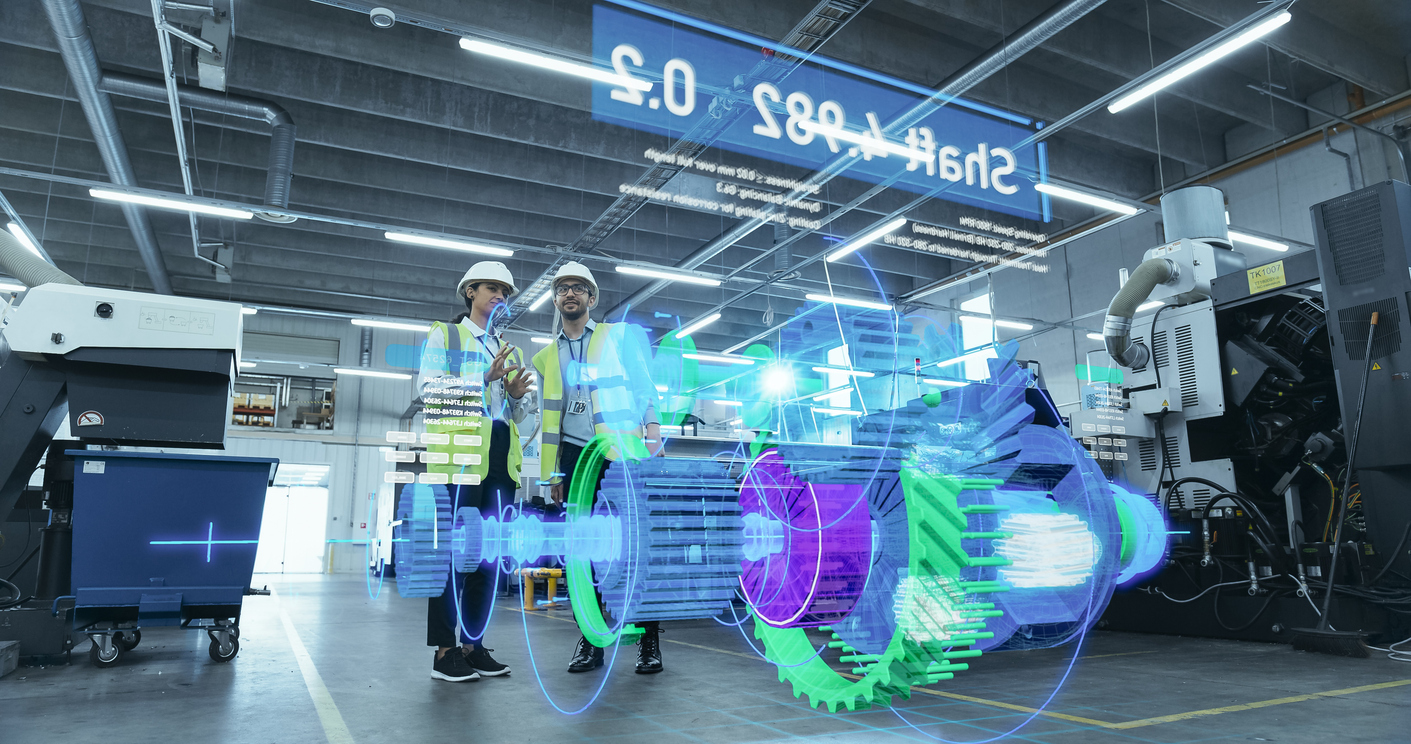
- 3D and augmented reality (AR) visualization allowing internal teams or end customers to see product configurations in real time
- Partner and reseller workflows enabling dealer networks to configure and quote accurately without compromising product or pricing rules
- Self-service capabilities empowering buyers to configure and request quotes directly through digital channels, speeding up response time and reducing sales friction
- Sustainability tools presenting the carbon footprint of solutions to optimize for customers’ sustainability needs
- Analytics providing deal data and customer behavior data to help you identify profitable designs and learn what deals are more likely to win
What types of CPQ software are available?
CPQ solutions generally fall into several categories:
- Embedded or platform-based CPQ: Quoting functionality included within a broader CRM or ERP platform. This may suit relatively straightforward quoting but can have limitations when products require complex engineering logic.
- Standalone manufacturing CPQ: Purpose-built software for configurable products, complex pricing, guided selling, visualization, and integration with systems such as ERP, CRM, PLM, and CAD.
- Cloud or on-premises CPQ: Most modern CPQ platforms are cloud-based, although some manufacturers continue to operate on-premises solutions because of internal architecture or regulatory requirements.
- AI-powered CPQ: CPQ that uses artificial intelligence to assist with product modeling, requirement interpretation, product selection, quote preparation, or model maintenance.
AI is becoming a significant part of the CPQ conversation. In 2026, 79% of manufacturers are investing in or exploring AI, up from 64% in 2025. Manufacturers expect particular value from automating complex configurations, reducing quoting errors, and accelerating response times.
Some of the most practical applications happen behind the sales interface. AI-assisted modeling, for example, can help teams turn product documentation, spreadsheets, and other structured or unstructured information into model foundations that experts can review and refine.
What business outcomes can CPQ deliver?
For manufacturers, CPQ can improve performance across sales, engineering, and fulfillment.
Faster quote turnaround
Automating configuration, pricing, approvals, and document generation enables teams to respond to customers faster. Siemens Energy, for example, reduced a quoting process that could take up to eight weeks to minutes after implementing Tacton CPQ.
More accurate, buildable quotes
Configuration rules help prevent incompatible products and missing requirements from reaching customers or downstream teams. Sales gains greater confidence that proposed solutions can be delivered.
Less routine engineering involvement
Sales teams can handle standard configurable orders independently, allowing engineers to focus on genuine exceptions, product development, and higher-value technical work.
Stronger pricing and margin control
CPQ applies pricing and approval rules consistently across teams and channels. It can identify discounting, configuration, and margin risks before a proposal is approved.
Scalable customization
Internal sales teams, dealers, partners, and customers can use the same underlying product logic through different interfaces. Manufacturers can expand product coverage and sales channels without duplicating rules in separate tools.
Better product and sales insights
CPQ captures data about customer requirements, selected options, pricing, and quote outcomes. This can help manufacturers understand which configurations sell, which options create delays, and where product complexity adds cost without improving customer value.
Faster sales cycles
Gartner research finds that 70% of B2B buyers prefer a completely digital, self-service buying experience. Self-service and omnichannel CPQ capabilities help buyers explore products and educate themselves independently before contacting sales. Sales teams can engage when buyers have stronger intent, validating buyer knowledge and reducing early-stage back-and-forth that slows down sales cycles.
How do you know whether your business needs CPQ?
A manufacturer may be ready for CPQ if:
- Quotes require repeated engineering review.
- Sellers rely on spreadsheets or tribal knowledge.
- Product and pricing rules differ across systems or regions.
- Quotes are frequently corrected after submission.
- Partners cannot configure products without assistance.
- New products take too long to add to quoting tools.
- Buyers struggle to identify the right product.
- The business cannot easily connect what was quoted with what must be built.
- Growth requires more configurable products, markets, or sales channels.
When evaluating CPQ, start with a specific business problem and a manageable product scope. Identify where quoting slows down, which products generate the most rework, and which handoffs create the greatest risk.
A focused initial implementation can establish the product modeling, integration, and governance foundation needed for broader expansion. The long-term objective should be a reusable configuration foundation, not another quoting tool that becomes harder to maintain as the business grows.
Why manufacturers choose Tacton
Tacton CPQ is designed for manufacturers selling complex, highly configurable products and is named a four-time Leader in the 2026 Gartner® Magic Quadrant™ for CPQ Applications. Its constraint-based configuration engine, AI capabilities, and strong integration with lifecycle systems help teams manage engineering dependencies, pricing, guided selling, visualization, and customer-facing configuration within one connected process.
As part of a larger connected suite that connects Tacton CPQ with configuration management and order fulfillment tools, CPQ can become a strategic part of the full manufacturing lifecycle.
Ready to see what CPQ can do for your business?