Back to Resources

The State of Digital Manufacturing in 2023 

This years 2023 Manufacturing Survey is out! Check out the latest initiatives, challenges and more manufacturers are facing this year

The State of Digital Manufacturing in 2023 

At Tacton we’re always learning about our manufacturing customers. To learn more about the latest in manufacturing we’ve conducted our annual State of Digital Manufacturing Survey. We conducted this to better understand the priorities, pain-points and initiatives manufacturers will take in 2023 to better serve their customers.  

In order to help manufacturers, stay at the forefront of these developments, we’ve released this report. We’re focusing on how manufacturers are building resiliency to ensure smooth end-to-end operations. Let’s look at some of the highlights from the report. 

Methodology 

The results in this report are from an online survey that was fielded from November 10th to 29th, 2022. There were 200 survey respondents from North America and Europe. 74% of respondents were at the managerial or executive level.  

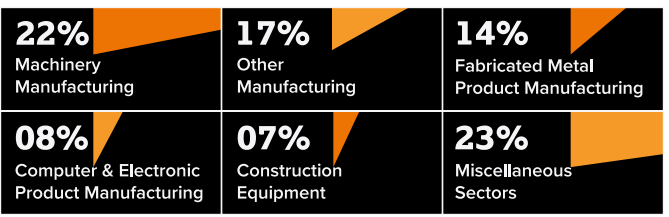
What best describes your manufacturing sector?
Digital transformation 

Digital transformations aren’t easy, they require time, effort, trial and error. But with big challenges come big risks of lagging behind the competition. Those that are well into implementation may find it easier to handle the upcoming economic challenges by having new processes in place.

How important is digital transformation to achieving your business goals in the coming year?

2023 priorities  

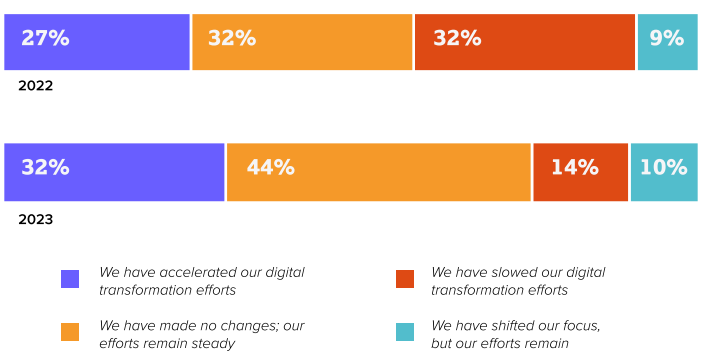
We asked manufacturers when they anticipate the next U.S. recession will begin. 47% believe it has already begun and a large majority believe it will start some time in 2023. Many manufacturers are bracing for a recession in the upcoming year. 32% of manufacturers have started the process of accelerating their digital transformation efforts.

How have recent uncertain economic times impacted your digital transformation efforts? 
Sustainability planning 

Sustainability in manufacturing has been discussed for years. But now manufacturers are realizing that it’s time to act and create easy ways to report and sell sustainably.   

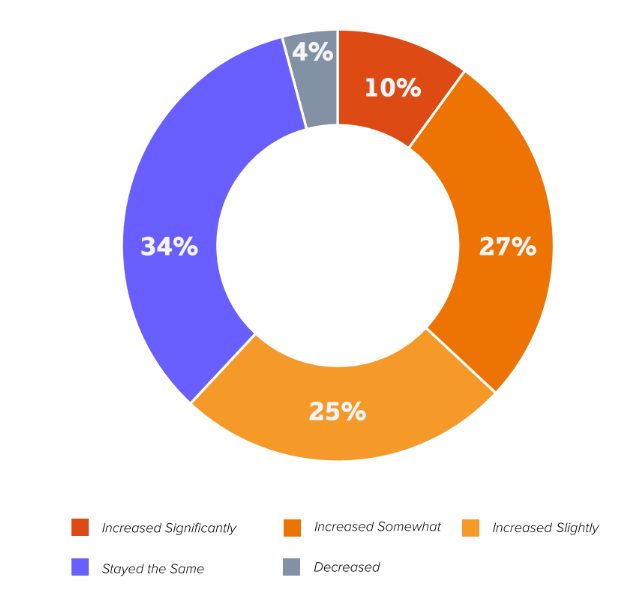
Strategic agendas based on sustainability are being driven by customer demands for transparency around the products they purchase. Price is no longer the most important factor to many customers; they want to know how their product will affect the environment. Just look how much climate impact information questions have increased in the past year.  

How have requests to provide information about the environmental or climate impact of your products changed in the past year? 
With regulations and transparency requests from customers manufacturers need to find new and innovative ways to deal with these challenges. Preparing for upcoming regulations and laws is an important topic for manufacturers in 2023. 20% of the respondents we polled noted that they are extremely prepared to improve, that’s up 8% from 2022.  

These regulations range from carbon neutrality to waste management and even the use of renewable energies. Measuring and managing sustainability impact will be critical for the long-term success of manufacturers. 

The next step 

Manufacturers have dealt with uncertainty, challenges and new customer demands at a rapid pace. That’s why many have started their digital transformation efforts to deal with upcoming economic challenges and sustainability initiatives around the globe. Manufacturers who turn these challenges into opportunities will find new market share and drive customer loyalty. Check out the full State of Digital Manufacturing survey here to find out what other initiatives manufacturers are focusing on!  
Back to Resources

What does an Omnichannel Manufacturing Experience Look Like?

Offer your customers an omnichannel manufacturing experience like never before. Let them pick and choose how they interact with your team.

What does an Omnichannel Manufacturing Experience Look Like?

Putting the customer at the heart of the sales process sounds like an easy thing to do right?

Many companies have different ways to reach their buyers but still fail to make successful impressions on them. This is a common occurrence in the manufacturing industry where highly individualized industrial products are sold daily in a mostly in-person setting with a sales executive.

Now that B2B buyers do most of the research (57% according to Accenture) and purchasing online it’s important to offer them the products where they are buying them and quickly. But offering them products quickly isn’t the most important part of an omnichannel experience. Customers want self-service, they want all the relevant information on hand before they even think about purchasing your products. Your buyers want to see the full range of your offering by using a configurator and visualization technology to see the product they want.

For all the worried salespeople reading this, don’t worry your job is still critical, but it’s important for your company to offer ways to eliminate the tedious processes that impede sales.

In-person selling is a proven way to sell directly to a customer, but with B2B buyers taking more time than ever to weigh their purchases it’s important to find a new way to reach them. This is where manufacturing could take a page out of the retail marketing playbook.

Once eCommerce became the main way customers bought products many retailers made products available via a website and mobile apps. Now more than ever manufacturing companies need to use an omnichannel experience to reach these customers, something that manufacturers who want to be more B2B-based need to do, to digitize their company.

What is omnichannel experience?

An omnichannel experience offers your customers a seamless way to interact and buy your products across multiple channels at any time, this allows for your business to be in touch with them throughout the buying journey.


What does an omnichannel manufacturing experience look like?

This is an important way to sell products in the manufacturing industry but how can it be done with products that are highly individualized and configuable?

To truly have an omnichannel experience it is necessary to simplify the sales process. As products have become more complex to build the longer the sales cycle has become. From the back and forth between sales and engineering to get orders right to building a unique item it can take a lot of man-hours to sell a product. This slow process needs to change to sell faster and enhance the customer experience.

The first step before a buyer contacts your sales team is researching your product offering. If you don’t have a place to showcase your unique products you will lose business to a company that can. This is where it is important to offer items such as a configurator and visualization right on your website. Buyers don’t want to have meetings in their initial stages of buying, they want to see how the product would look and feel.

Selling can be easier when you understand the tendencies of your buyer, an omnichannel selling experience allows for you to be with them at every touchpoint along their journey. Adding something like a built-in configurator will be another reason why they’d choose your business over the competition who can’t show them their product on their phone or the comfort of their own home. 

An omnichannel experience for your customer can also help align the goals of your sales and marketing teams. Having an omnichannel presence can bring marketing and sales closer by leveraging the data from your customers into results.

Allowing your customer to reach out to a sales team member at any point is important for several reasons. Understanding which channel, the customer has come from can help your sales and marketing teams engage them with similar content or messaging as the channel they came from. This allows your sales rep to have all the information about the customer before they even walk into the sales meeting, helping them prepare the perfect pitch.

If you want to learn more on how Tacton CPQ Omnichannel can reinvent the go-to-market  – even for highly individualized industrial products – head over to our web page or schedule your personal demo today!