Login to Customer Portal
 Contact
 Search
Make B2B Self-Service Ordering Easy with Tacton Self-Service Channels for Manufacturers
Learn how Tacton’s new Self-Service Channels makes it easier than ever to launch a self-service online configurator for complex products.


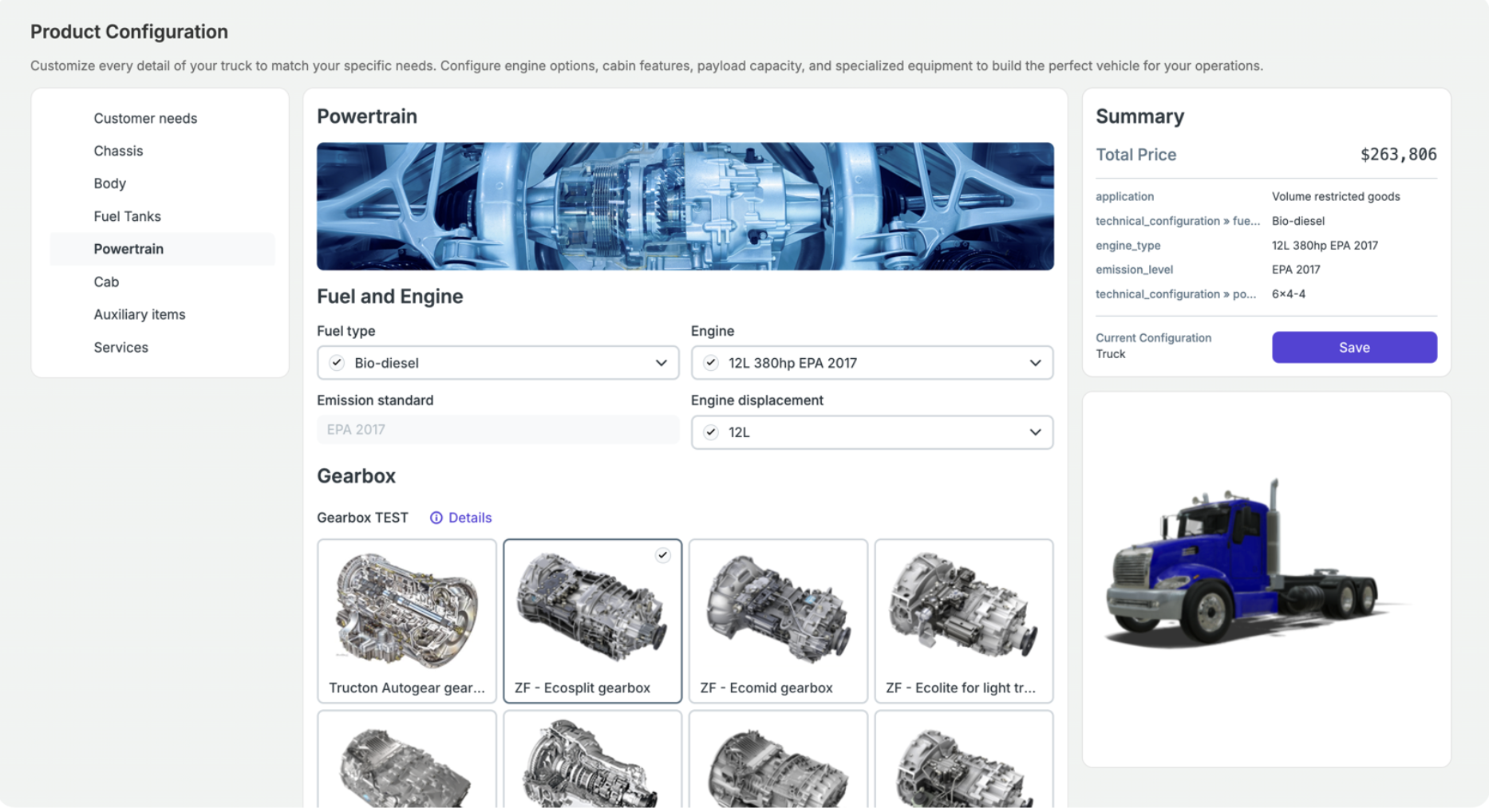
The line between B2C and B2B sales continues to blur. Even buyers of highly configurable products want the same independent, immediate, and simplified online buying experience they get on Amazon or Uber. Yet, while 67% of buyers want a rep-free, self-service buying experience, only 24% of manufacturers prioritize self-service as a sales channel.
Manufacturers of complex products have an opportunity to gain advantage against competitors with faster sales cycles, fewer human errors, and an easier way to explore your products. Tacton Self-Service Channels (SSC) takes customer self-service ordering to the next level, removing the need for advanced API setup with an easily embeddable website quoting experience. Enhance buyer engagement and sales-buyer collaboration across the sales cycle.
What is Tacton Self-Service Channels?
Tacton Self-Service Channels (SSC) allows you to embed powerful quoting capabilities directly into your website, powered by the exact same product rules, pricing logic, and validation engine used in your internal Tacton CPQ.
Using ready-to-deploy HTML components, you can embed this experience without building a custom solution from scratch. While customers can continue using the original API-based Customer Self-Service, SSC makes it significantly easier to launch a fully branded online buying interface and, soon, will support sales-buyer collaboration earlier in the process.
Tacton SSC includes:
- A quick, basic setup once your product model is ready.
- HTML components you can drop directly into your site.
- One product model, one pricing logic, one source of truth across all channels (OEM, dealer, partner) directly from your Tacton CPQ configurator.
Earlier collaboration across the sales cycle
Unlike the first-generation Tacton Customer Self-Service tool, SSC is designed for collaboration. The original Customer Self-Service tool keeps the process isolated until the buyer completes configuration and submits it. Sales can only engage at the end.
With the new Self-Service Channels, sales staff and support will soon be able to step in at any point, including reviewing configurations, adjusting pricing, collaborating on proposals, or guiding complex deals before a final quote is issued. Buyers can start independently, and your team can join when it adds value.
Rather than replacing sales reps through independent buying, this tool gives sales the opportunity to close faster and exert control over the sales experience.
Tacton SSC scales revenue with control
A streamlined self-service tool gives your buyers a consistent, accurate experience of your products. It also gives internal teams the ability to scale sales sans the additional costs.
- Ensure consistency everywhere: Power internal sales, distributors, retailers, and web buyers from the same product catalog. Product and pricing changes propagate across all channels automatically.
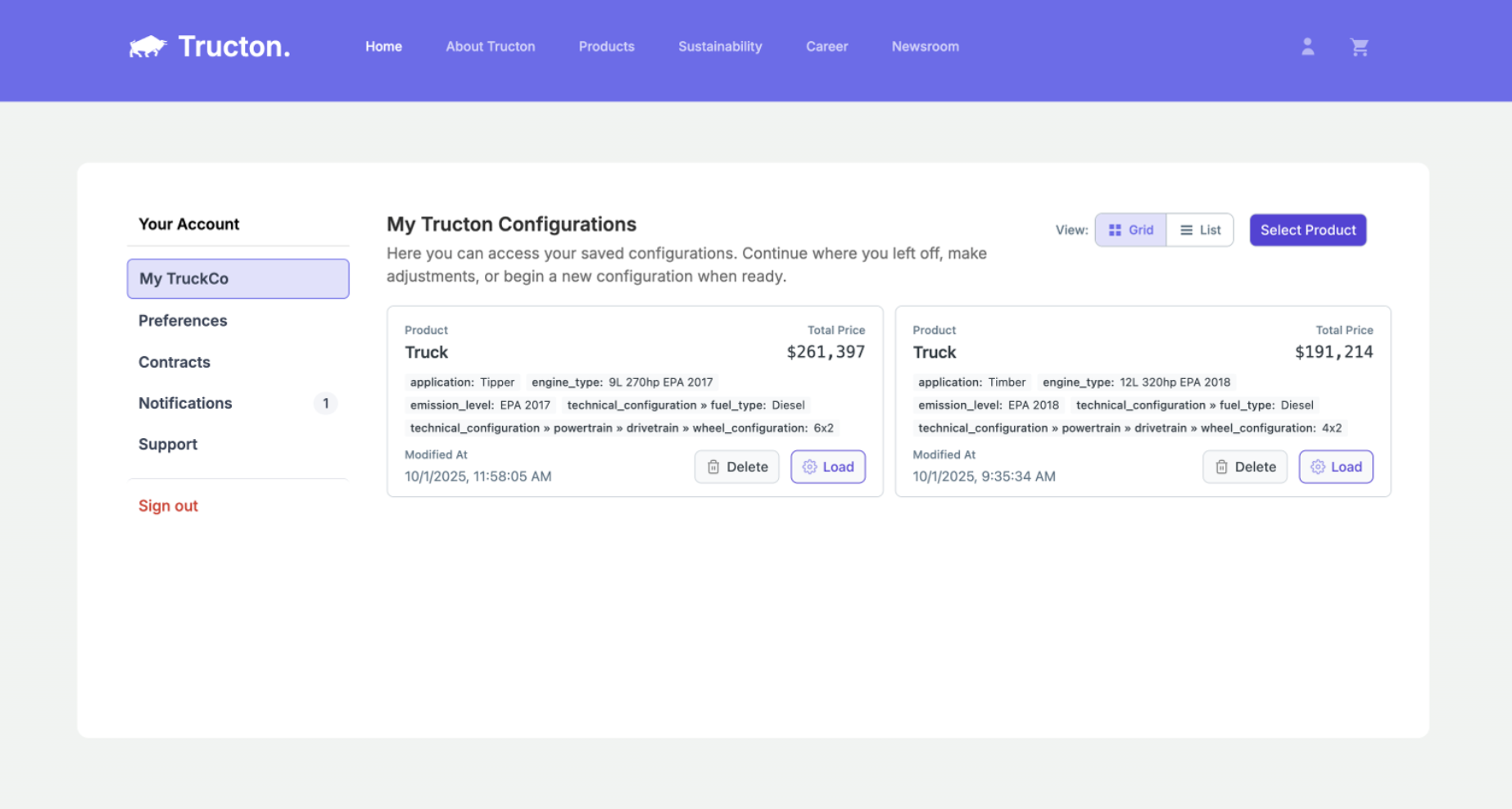
- Offer flexible access: Enable anonymous browsing or require login for personalized experiences.
- Protect pricing integrity: Use role-based pricing so distributors see their pricing, not your margins.
- Maintain approval control: Launch with quote-request-only workflows and require manual approval for sensitive or high-value quotes.
- Control product exposure: Decide which products are available externally and which remain internal-only.
- Sell faster: Sales teams spend less time on basic quoting and more time closing strategic deals.
- Guarantee valid quotes with fewer engineering hours: Engineering stays focused on innovation instead of validating configurations. Every configuration follows the same rules used by your internal CPQ.
- Reduce tool complexity: IT extends CPQ securely without adding system complexity.
- Scale revenue: Executives scale revenue without scaling operational costs.
The shift toward self-service is already happening across manufacturing. As business analyst at Meyn Food Processing Technology, Sicco Saft, recently shared when asked about the future of digital sales tools:
“Today everybody has e-commerce. We get more and more people retiring. We have less workforce and a lot of customer demand. So self-service is the way forward.”
How to get started with Tacton SSC
Tacton SSC does not automatically replace the first-generation customer self-service tool for current users. Likewise, new customers will not be able to purchase the old self-service tool.
Speak with a Tacton representative to learn more about how Tacton Self-Service Channels integrates into your larger channel strategy.
Frequently asked questions about Self-Service Channels
Can we control what pricing customers see?
Yes. You control pricing visibility (including no pricing visibility) through login requirements, role-based pricing, and optional approval workflows before quotes are finalized.
Do we have to allow customers to place orders automatically?
No. You can limit the experience to quote requests only and require manual review before issuing firm quotes or accepting orders.
Can customers save their progress in the self-service experience?
Yes. If you enable login functionality, users can save configurations and return later to complete or revise them.
Does Tacton track the end user directly?
No. User logins and customer data remain controlled by you, not Tacton.
Will Self-Service Channels support system configuration?
Yes. Self-Service Channels supports full configuration setup with assistance during implementation.
How is pricing structured for Self-Service Channels?
Pricing is consumption-based.